Texas Test Plugs and the Hydronics Industry go hand-in-hand
Hydronics Industry
Hydronic systems use various valves, primarily for controlling, regulating, and directing water flow. Common types include balancing valves for flow regulation, control valves like characterized ball, globe, and butterfly valves for system adjustment, pressure-independent control valves (PICVs) for constant flow despite pressure changes, and specialized valves such as check valves, diverter valves, and pressure relief valves.
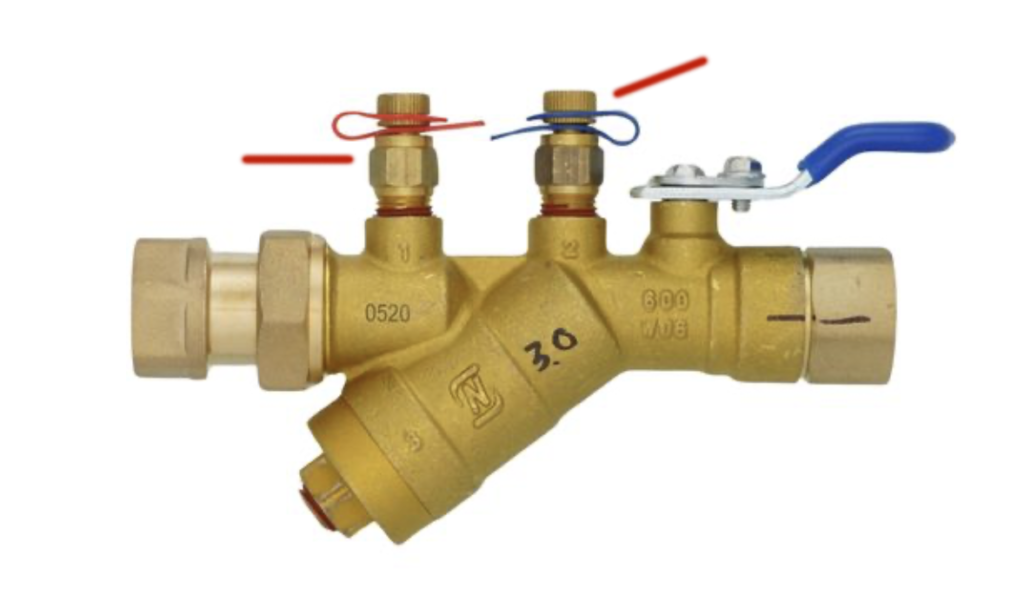
A hydronic balancing valve is designed to adjust the flow rate in the pipes of a hydronic heating or cooling system to ensure even distribution of heat or chilled water throughout the system. Proper balancing is crucial for the efficiency and performance of a hydronic system, as it ensures that all areas receive the appropriate amount of heating or cooling. These valves are adjusted during system commissioning and may be readjusted if the system layout changes or if imbalances are detected during operation.
Balancing Valves
These devices introduce resistance to a section of the pipe, allowing technicians to fine-tune the flow rate for even temperature distribution.
Manual Balancing Valves
Simple throttling devices that help to balance the system by controlling flow.
Automatic Balancing Valves
Automatically adjust to maintain constant flow rates, often using a combination of a control valve and a pressure regulator, according to red-white valve corp.
Specialty Valves
Pressure-Independent Control Valves (PICVs): More advanced control valves that maintain a constant flow rate to a coil or branch, regardless of changes in system pressure.
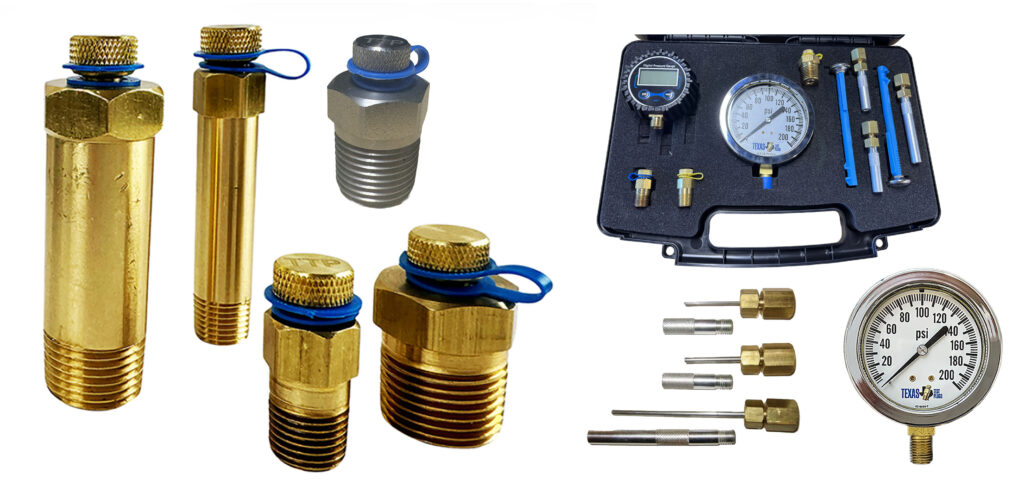
Material Selection: Brass or Stainless Steel bodies. Corrosion resistance is critical in hydronic systems (due to treated water, glycol mixtures, and sometimes chemicals). Brass is common, but stainless steel is preferred in harsher or higher-pressure conditions. Texas Test Plugs offers both Brass and Stainless Steel Test Plugs.
Elastomer Core:
EPDM (Nordel) is widely used in hydronic systems for compatibility with glycol, hot water, and steam condensate.
Neoprene may be used in general water service but has less chemical resistance.
Texas Test Plugs offers users a choice of either material.
Size & Thread Standards: Texas Test Plugs offers both ¼” and ½” NPT (National Pipe Thread) fittings for test ports.
Pressure Ratings: Hydronic systems often run from 30 psi up to 150 psi, sometimes higher in commercial systems. Texas Test Plugs are rated to 1000 psi and perform well at low pressures with little-to-no weeping.
Temperature Ranges:
Neoprene is rated -40°F to 200°F.
Nordel (EPDM) is rated -40°F to 300°F.
Sealants: Texas Test Plugs are available with pre-applied thread sealant.
Ease and Safety: Color-coded straps (yellow for neoprene, blue for EPDM) are standard. Special colors are available.