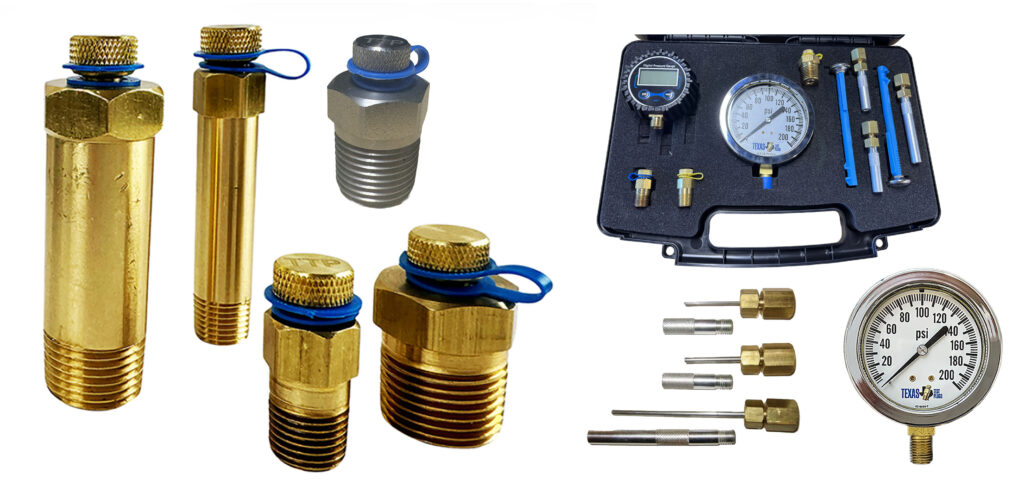
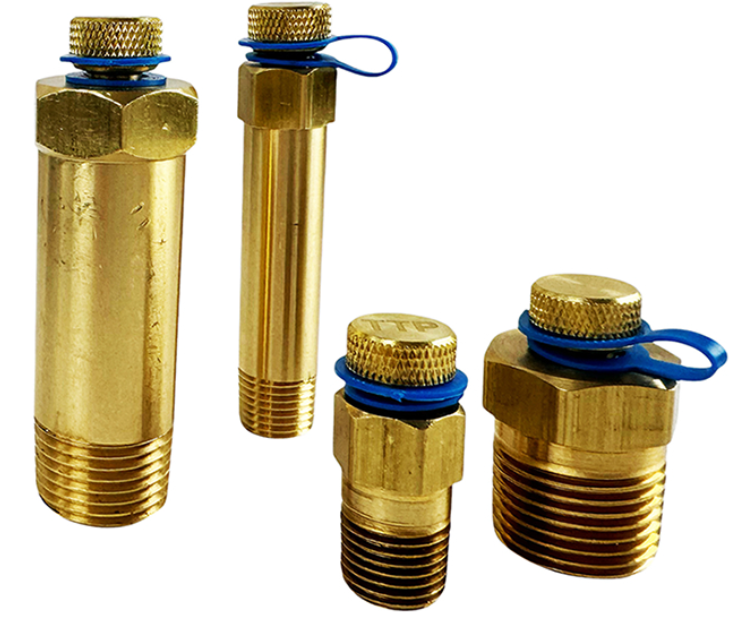
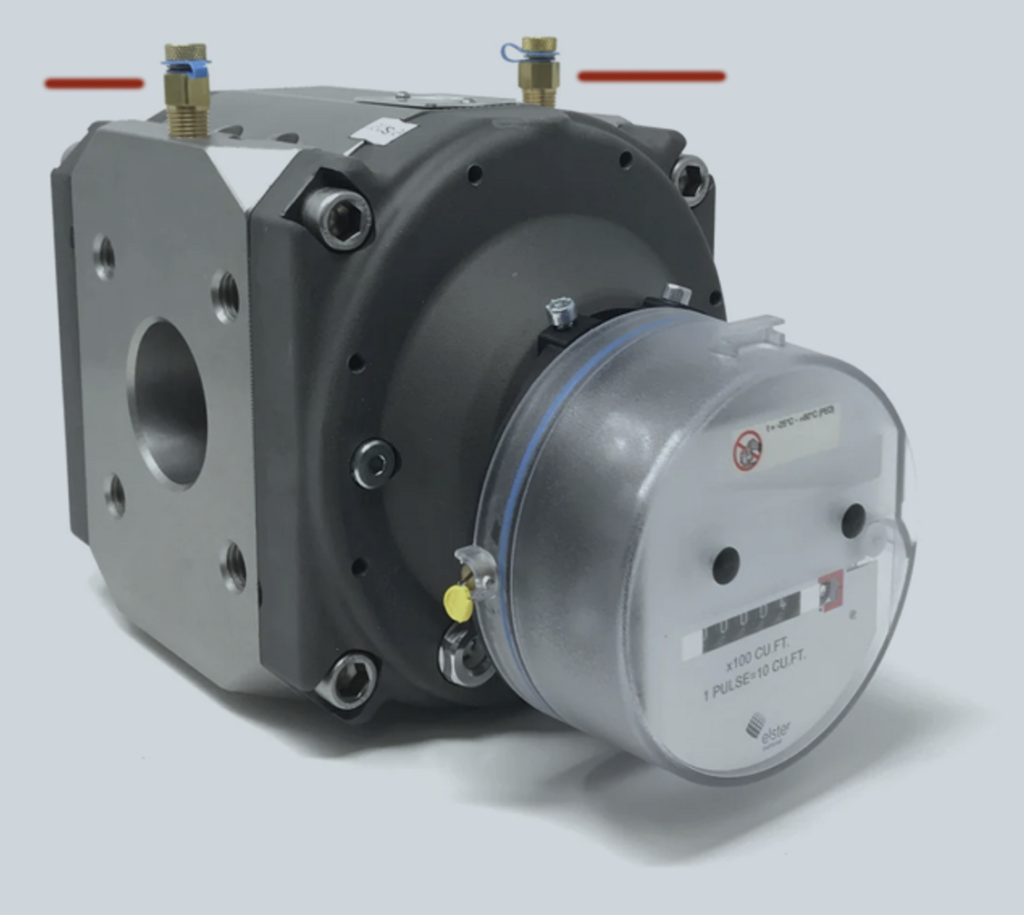
Brass test plugs are located on both the inlet and outlet side of the matter of the aid in measuring differential pressure. Gauge adaptors are used to take pressure readings.
Texas Test Plugs are available in both 1/4" and 1/2" NPT threads.
Markets We Serve
Texas Test Plugs in Natural Gas Applications
Rotary gas meters are positive displacement meters for measuring industrial and commercial gas flows. This style of meter is known for its high accuracy across a wide range of flows in a compact design. They typically use intermeshing, figure-8-shaped impellers to create a seal, trapping and moving a precise volume of gas for each rotation to accurately track total volume.
Rotary gas meters have test ports on the inlet and outlet sides. This provides a way to measure the differential pressure across the meter’s impellers. This differential pressure test checks the meter’s mechanical health by monitoring internal friction. A significant increase in the pressure drop can indicate excessive wear or other performance issues. These test ports allow for periodic monitoring and establishing a baseline for meter performance.
Texas Test Plugs are widely used on rotary gas meters due to their proven long-term performance, low cost, and off-the-shelf availability. We work with OEMs to provide reliable, scheduled deliveries.
Purpose of the Test Ports
Differential Pressure Monitoring
The primary purpose of these ports is to allow for differential pressure (DP) testing.
Health Check
Measuring the DP across the meter provides insight into the internal resistance of the meter’s components, indicating their condition.
Baseline Data
Initial differential pressure readings are taken at various flow rates to establish a baseline curve for the meter. This curve shows the expected pressure drop at different flow rates when the meter is new.
Performance Tracking
Future tests compare current DP readings to the baseline curve to identify changes in performance.
Early Warning for Issues
A significant increase in the differential pressure (often considered a 50% rise from the baseline) suggests increased internal friction, which can lead to accuracy issues and a need for service.